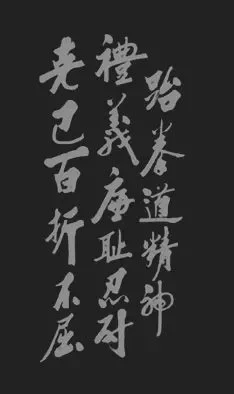
Complete Taekwondo Development
Free Sparring
Free sparring is the dynamic application of Taekwondo techniques in a controlled, live setting. Students develop timing, distance control, speed, and strategic thinking while engaging with a partner under supervised conditions. It builds confidence, discipline, and respect, teaching practitioners how to remain calm and focused under pressure. Through free sparring, students learn to adapt, react, and apply their skills effectively in real time.
Self-Defence
Self-defence training focuses on practical techniques designed to protect oneself in real-life situations. Students learn how to respond effectively to grabs, strikes, and other common threats using controlled movements, awareness, and proper technique. Beyond physical skills, self-defence builds confidence, situational awareness, and the ability to remain calm under pressure. The goal is not only to defend, but to develop discipline, control, and responsible decision-making.
Patterns
ITF patterns (Tul) are structured sequences of movements that combine offensive and defensive techniques in a precise, meaningful order. Each pattern represents specific principles of balance, power, timing, and breath control while reflecting the philosophy and history of Taekwondo. Through consistent practice, students refine their technique, improve coordination, and develop focus and discipline. ITF patterns build strong fundamentals that form the foundation for all other areas of training.
Taekwondo Belt System
Where Every Black Belt Began
White Belt (10th Gup)
Represents innocence and a new beginning, where the student starts their Taekwondo journey with an open mind and a willingness to learn.
Yellow Tag (9th Gup) / Yellow Belt (8th Gup)
Symbolises the earth, the foundation upon which strong skills, discipline, and character are built.
Green Tag (7th Gup) /
Green Belt (6th Gup)
Represents growth and development, as techniques begin to strengthen and confidence starts to flourish.
Blue Tag (5th Gup) /
Blue Belt (4th Gup)
Symbolises the heaven toward which the student’s skills rise, reflecting expanding knowledge and increasing maturity.
Red Tag (3rd Gup) /
Red Belt (2nd Gup)
Represents danger and caution, reminding students to exercise control, responsibility, and respect as their power increases.
Black Tag (1st Gup)/
Black Belt (1st–9th Dan)
Signifies readiness and commitment as the final step before Black Belt. Represents mastery, leadership, and a lifelong dedication to growth in Taekwondo.
Responsibility of a TKD Black Belt Practitioner
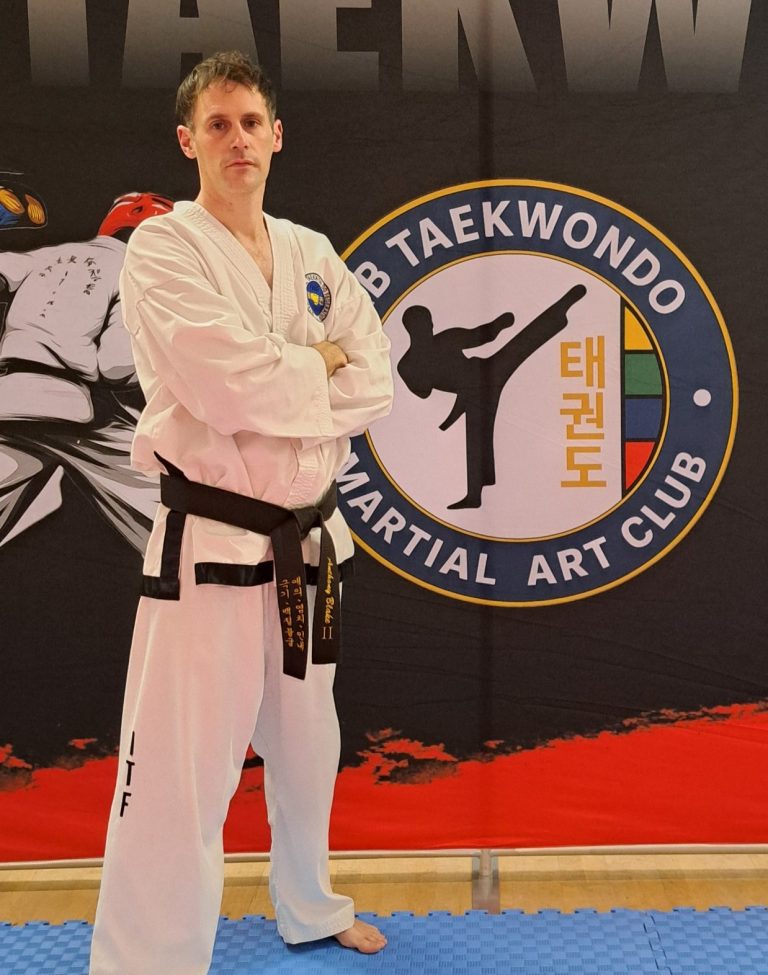
Achieving a black belt in Taekwondo requires years of consistent training, technical mastery of fundamental techniques, patterns, sparring, and breaking, as well as strong physical fitness, discipline, perseverance, and mental focus. It reflects dedication, self-control, and a commitment to continuous improvement. A black belt is expected to be a role model who demonstrates respect, humility, and leadership, supports junior students, performs techniques with precision and confidence, and maintains a lifelong commitment to learning and personal growth.
COURTERSY
예의
INTEGRITY
염치
PERSEVERANCE
인내
SELF CONTROL
극기
INDOMITABLE SPIRIT
백절불